
In marine industries, pumping equipment—particularly slurry pumps—plays a vital role. Transporting fluids containing solid particles such as sand, mud, and clay requires equipment that not only exhibits high resistance to abrasion but also allows for easy on-site repair. This article examines the fabrication, repair, reconditioning, and maintenance of slurry pumps in marine environments, focusing on technical considerations, advanced repair methodologies, and the critical importance of on-site services to minimize operational downtime.
1.Nature of Marine Slurry Pumps and Associated Challenges
Slurry pumps are specifically engineered to handle mixtures of water and solid particles and are widely used in marine applications such as dredging, sand-pumping operations, and coastal construction projects. These pumps are subjected to severe abrasive wear caused by solid particles and high-flow conditions. Common issues include internal casing corrosion, impeller erosion, mechanical seal leakage, and bearing damage.
Consequently, timely repair or reconditioning of these pumps is critically important—especially when performed on-site—to minimize production or operational downtime.
2.Slurry Pump Reconditioning and Repair Procedures
2.1 Initial Inspection and Fault Diagnosis
Initially, a skilled technician inspects the pump for issues such as:
- Erosion of the casing or impeller
- Leaks
- Bearing or shaft failure
- Presence of cracks or fractures
Documenting findings—including photographs and initial measurements—is a crucial step to ensure accurate planning of the repair process.
2.2 Surface Preparation (Sandblasting)
To enhance the adhesion of repair materials, the pump’s internal surfaces are sandblasted. This step is essential for removing deposits, corrosion, and old coatings.
2.3 Repair of Worn Areas
In regions exhibiting severe erosion, filler materials such as ceramic-filled epoxies are applied. Compounds like Belzona 1321 or Belzona 1812 are suitable repair options and, in certain projects, have significantly extended equipment service life.
2.4 Re-machining
Following the repair, re-machining operations are carried out to restore dimensional accuracy, impeller-to-casing clearances, and surface alignment to original equipment manufacturer (OEM) specifications. This stage is highly critical, as it directly enhances the pump’s overall hydraulic performance.
2.5 Mechanical Assembly and Component Alignment
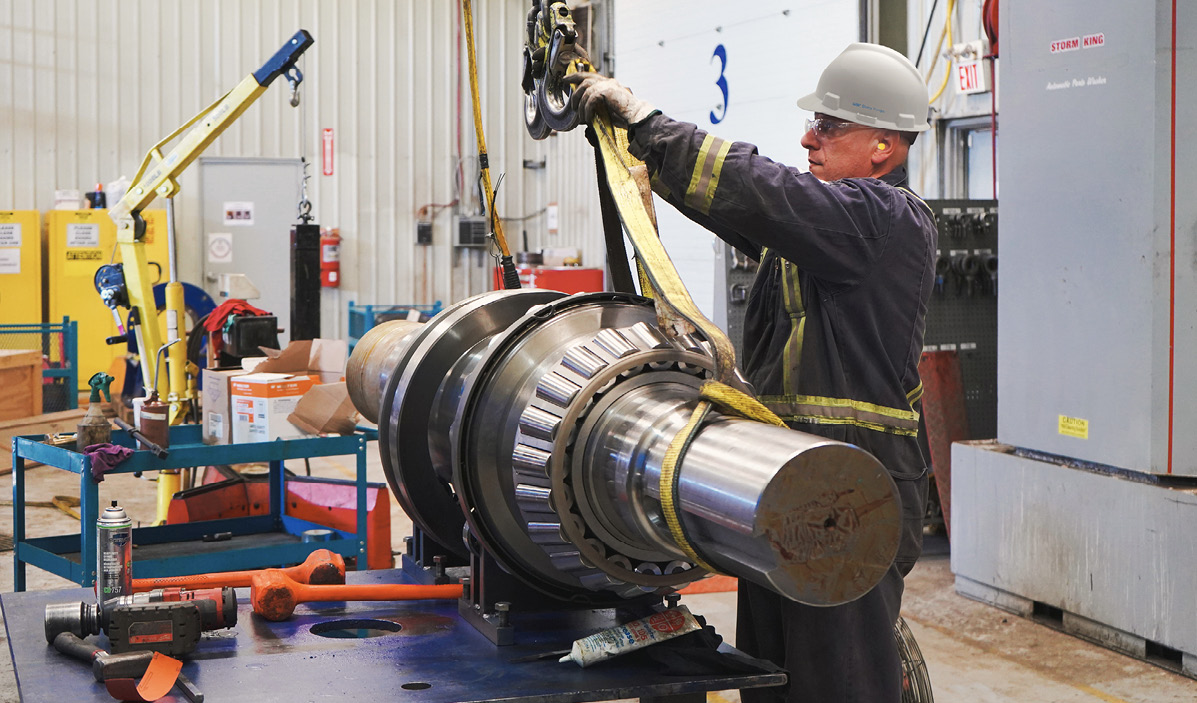
After machining, bearings, seals, shafts, and other mechanical components are carefully assembled. Precise adjustment of impeller clearances and proper bearing lubrication are critical factors that directly influence the pump’s service life.
2.6 Pressure and Performance Testing
Finally, the pump undergoes comprehensive testing:
- Hydrostatic pressure test using water or a similar fluid
- Vibration, noise, and temperature monitoring of components
- Inspection for leaks or signs of abnormal operation
These tests ensure the repair has been successful and that the pump is ready for reliable marine service.
3.Advantages of On-Site Repair and Fabrication
3.1 Reduced Operational Downtime
On-site pump repair eliminates the need for disassembly, transportation to a workshop, or prolonged shutdowns, allowing equipment to return to service in the shortest possible time.
3.2 Cost Savings
On-site repair significantly reduces transportation, reinstallation, and labor costs. Moreover, avoiding the purchase of a new pump—when effective restoration is feasible—offers substantial economic benefits.
3.3 Enhanced Safety and Quality
Employing skilled technicians and adhering to recognized industry standards minimizes risks associated with hidden defects and unexpected failures. Additionally, thorough documentation of repair procedures supports compliance with quality certifications such as ISO.
4.Maintenance and Preventive Recommendations
4.1 Regular Inspection of Critical Components
Periodic inspection of the impeller, casing, bearings, and seal fasteners helps prevent sudden failures. Technical inspections are recommended at least once per month.
4.2 Implementation of a Preventive Maintenance Program
Establishing scheduled intervals for replacing or overhauling worn components—such as impeller wear rings and bearings—extends pump service life and reduces the likelihood of unexpected breakdowns.
4.3 Selection of Wear- and Corrosion-Resistant Materials
Using abrasion- and corrosion-resistant alloys for internal components—such as stainless steel or high-chrome white iron—ensures stable, long-term performance in harsh marine environments.
5. Practical Experience and Case Study
In a recent marine repair project, a specialized service company carried out the following operations:
- Complete sandblasting of the casing and impeller
- Application of ceramic-filled epoxy coating on worn areas
- High-precision re-machining of internal surfaces
- Replacement of seals and bearings, followed by precise assembly
- Operational performance testing after on-site installation
Conclusion: The pump’s service life exceeded two years, and the cost of a full replacement—originally estimated at over $15,000—was reduced by more than half, while the unit’s downtime was limited to just a few hours.
6. Manufacturing New Marine Slurry Pumps from Scratch
In addition to reconditioning, high-quality slurry pumps are also fully fabricated in-house:
6.1 Selection of an Appropriate Hydraulic Design
The hydraulic configuration is carefully selected based on fluid characteristics, flow rate, head requirements, and operating conditions—including solids concentration, particle size, and marine environmental factors.
6.2 Production of Wear-Resistant Components
Impellers, casings, bearings, and other components are manufactured using appropriate materials and precise mold-making techniques.
6.3 Precision Assembly and Alignment
Within the workshop, valves, impeller balancing, and mechanical connections are installed in strict accordance with OEM tolerances.
6.4 Factory Acceptance Testing
Following assembly, the pump undergoes comprehensive testing—including pressure, operational noise, vibration, and leak checks—to guarantee final quality.
7. Conclusion
Repairing and fabricating slurry pumps for marine industries is a dynamic process requiring high levels of expertise. Performing repair or fabrication operations on-site offers significant advantages, including reduced downtime, cost savings, enhanced safety, and extended equipment service life.
Emphasis on proven methodologies—such as sandblasting, application of wear-resistant epoxy compounds, high-precision re-machining, and custom manufacturing of components to meet stringent standards—ensures that slurry pumps deliver reliable, stable performance in demanding marine projects.
Ultimately, these specialized services—backed by technical knowledge and advanced equipment—can significantly reduce operational costs and optimize the entire repair and utilization process.